- Op-Ed
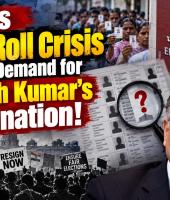
- India’s Voter Roll Crisis and the Demand for Gyanesh Kumar’s Resignation!
India’s Voter Roll Crisis and the Demand for Gyanesh Kumar’s Resignation!
How the SIR dispute, internal objections at the Election Commission and a Gen Z protest call have turned a pre-poll process into a test of democratic trust.
Support Independent Media

The ballot begins before the booth
Election integrity begins before a voter reaches a polling station. The register decides who gets through the door. A person whose name is missing may arrive with the right identity card and still be unable to vote. The Special Intensive Revision of electoral rolls has therefore become more than a technical argument between officials. It asks whether citizens remain visible as electors, and whether the process that decides this can be checked.
A revision is not inherently suspect. Rolls need to remove duplicate and deceased entries, record migration, correct errors and add first-time voters. But the burden of error falls unevenly. A migrant may miss a notice; a spelling mismatch can split a family across records; women who move after marriage or people displaced by floods may be asked to reconstruct paperwork they never needed before. The test is whether every eligible voter receives clear notice, understands the reason for a flag and can correct it before polling.
Evidence available on 26 September 2026 warrants close scrutiny of the Election Commission of India. It does not establish that the Commission or the ruling party stole a national election. A slogan can draw attention to a risk, but a remedy depends on showing what happened to which voter, under which rule, and whether the voter could appeal.
Fourteen objections changed the story
The immediate spark was an investigation published by The Indian Express on 23 September. It reported that Election Commissioners Sukhbir Singh Sandhu and Vivek Joshi made at least 14 written objections over ten months about voter additions, deletions and restorations, appeals, Form 6 and control of the electoral-roll database. One concern was that first-time applicants were asked to link themselves or their families to an earlier intensive revision. The commissioners questioned whether a prescribed form could be changed without amending the rules.
Technology is central to the dispute. Electoral Registration Officers have statutory responsibility for local rolls. The investigation reported concerns that state officials lacked full access to central systems and that a software flag or override could limit local correction. If the officer hearing a voter cannot reverse a system-generated discrepancy, the appeal may exist on paper but fail in practice.
The Commission says all decisions, including the SIR, were approved unanimously. The objections may have been raised while proposals were being drafted; their existence alone does not prove that final orders were made by one commissioner. Yet repeated written concerns about voter access and legal authority cannot be settled by a press statement. The public needs the minutes, final orders, technical logs and a point-by-point answer.
Two claims must remain distinct. Senior commissioners did raise repeated objections about procedures that shape electoral administration. The further claim that these procedures were designed to benefit the BJP or alter outcomes requires evidence of intent and effect. The first deserves an answer now. The second cannot be treated as a finding.
A lawful revision can still fail a voter
On 27 May 2026, the Supreme Court upheld the Election Commission’s authority to conduct the SIR in Bihar, while emphasizing notice, hearings, reasoned decisions and appeals. That answers the claim that every SIR is unlawful from the outset. It does not pre-approve every later software filter, form, state-level implementation or deadline. Each exercise must stand on its own record.
A draft omission is different from a final deletion. So is a duplicate entry, a voter who has moved and an eligible elector wrongly excluded. Large draft-stage totals are not a count of proven disenfranchisements. Yet a correction made after polling cannot restore the vote that was lost. In West Bengal, a large appeal backlog left many cases unresolved as the 2026 Assembly election approached. The number of eligible electors wrongly excluded must be established case by case; the scale and timing of unresolved appeals still pose a serious due-process question.
On 22 September the Supreme Court asked the Commission to explain notices for “logical discrepancies” in Delhi that appeared mechanical, and called for clearer reasons and usable assistance. That is not a ruling that Delhi’s revision is unconstitutional. It is a test of whether citizens can understand and answer a machine-generated flag.
More than 2,000 citizens have written to the Chief Justice seeking urgent intervention. PUCL has called for removal proceedings against the CEC and restoration of names deleted through the SIR. These are advocacy positions, not court findings. They show that concern now extends beyond party headquarters and that citizens are asking courts to inspect the record.
Why the CEC has become the symbol
Calls for Gyanesh Kumar to resign bring together public trust and constitutional accountability. A CEC presides over an institution whose decisions determine who can participate in choosing a government. Following reports of sustained internal objections about the voter database and first-time registration, the head of the Commission must provide a full explanation. If records show that statutory officers were blocked or unlawful procedures knowingly retained, individual responsibility becomes unavoidable.
A resignation demand is not a removal proceeding. The Prime Minister cannot dismiss a CEC as if he were a cabinet minister. Article 324 provides a stringent parliamentary removal process, on grounds of proved misbehaviour or incapacity, similar to that for a Supreme Court judge. It requires addresses passed by both Houses. A voluntary resignation is different, but only the office-holder can make that choice.
The demand has symbolic force because it says that an institution cannot answer every crisis by insisting that procedure was followed. But a resignation without published records, an independent inquiry or changes to disputed rules may look like a personnel change that leaves the system intact. If Kumar stays and the Commission provides no usable evidence, the dispute may harden into a lasting crisis of confidence. The name on the door matters; what happened to the voter’s name matters more.
The earlier protest raised the stakes
The Cockroach Janta Party, which uses the same initials as the separate rights group Citizens for Justice and Peace, entered this debate with unusual political capital. It began as a satirical, social-media-driven youth movement after Abhijeet Dipke’s post responding to a remark about unemployed young people. It later became a rallying point after NEET paper leaks. Reports placed its Instagram reach in the tens of millions. Followers do not equal street turnout, but the movement can move a grievance quickly from a phone screen to a public square.
After weeks of student mobilisation, Education Minister Dharmendra Pradhan resigned on 25 July amid the NEET crisis. Young supporters read this as proof that collective pressure could move the political centre. That memory now shapes the campaign against Kumar. The comparison has limits: a minister belongs to the elected executive, while a CEC is constitutionally protected and subject to a separate removal process. Pradhan’s resignation shows that protest can change political calculation; it does not guarantee the same outcome here.
On 24 September, Dipke gave Kumar 48 hours to resign and said the movement would begin nationwide protests from Mumbai on Gandhi Jayanti, 2 October, if he remained in office. The movement has also called for a freeze on further SIR exclusions, restoration of the January 2025 roll while disputes are resolved, and repeal of the 2023 Election Commissioners law. Dipke separately urged opposition parties to stop contesting elections if they believe the system is rigged. That is the sharpest strategic break in the campaign.
Party machines and student networks
On 25 September the issue moved beyond one youth platform. Congress organised demonstrations in multiple cities. Opposition leaders, student groups and youth organisations joined or endorsed protests; police detained demonstrators in Delhi and other locations. It was not yet one disciplined national movement, but it had a visible public life.
Political parties bring booth-level agents, lawyers, local offices, elected representatives and access to poll records. They can help voters find the right officer and preserve appeal paperwork. Their weakness is credibility: a party’s claims may look self-interested, especially when its position changes across states. The silence of some opposition leaders reflects that political calculation as well as fear of being dismissed as sore losers.
CJP can reach young people who avoid party meetings. Its humour and digital fluency can make procedure legible, but a viral account alone cannot sustain a campaign. AISA and SFI were visibly present in the 25 September actions. AIDSO and other student groups could widen the campus network if they join a shared rights-based programme. Their work can bring volunteers, public discussion and first-time voters into the process without implying that every student shares a single political line.
Civil society adds a distinct role. PUCL has called for formal accountability. The citizens’ open letter to the Chief Justice widens the pressure beyond parties. The separate Citizens for Justice and Peace, along with voter-rights groups, can explain notices and document cases. These groups complement each other when parties contest and legislate, students organise and educate, and civil society monitors rights independently.
When the street becomes a classroom
A movement about electoral rolls succeeds first by making the process understandable. “SIR” is an acronym; “my name is missing” is a lived fact. Many citizens do not know how to check their entry, which form to file, where to appeal or what proof may be required. A protest that explains those steps can turn anger into practical knowledge. Repeating an allegation without showing people how to protect their registration may win a news cycle and lose the voters it claims to defend.
Student organisations can run campus and neighbourhood voter clinics, translate notices and help first-time electors complete forms. Parties can provide Booth Level Agents and legal help. Independent lawyers and data specialists can check whether official records match the decisions. Every campaign should distinguish a draft omission from a final deletion and a suspected error from a confirmed one. That discipline makes the case harder to dismiss.
The CJP campaign also tests whether Gen Z engagement can move from anger at an exam system to an understanding of constitutional rights. The issues connect through a demand that institutions explain decisions affecting young people’s futures. But youth are not a single bloc. Some will join CJP, some the Left, some a party and many none of them. A durable movement offers a public question, not a loyalty test: can an eligible voter see the rule, obtain a fair hearing and vote on time?
Boycott sounds forceful and gives away ground
The boycott argument has an intuitive logic. If opposition parties say a contest is compromised, participation can seem to legitimise it. A boycott can dramatise the claim that normal politics is impossible and force national attention onto the referee. It may be considered in extreme conditions where parties can show that meaningful participation is impossible and every remedy has failed.
In this dispute, a blanket boycott is more likely to weaken the opposition’s ability to prove its case. Parties that contest place agents at polling stations, collect Form 17C records and observe the count. Their candidates can pursue election petitions where the law allows. They see how roll changes work at booth level. Leaving may remove the witnesses and records needed to show whether an exclusion was wrongful or a count inaccurate.
The field would not remain empty. The ruling party could win overwhelming victories; smaller parties might fill the opposition space. The government could point to a completed poll as evidence that voters accepted the result. A boycott would not automatically stop elections or suspend SIR. It could hand the incumbent both the seats and the story.
The stronger strategy is resistance inside and outside the contest. Parties can field candidates and agents while challenging procedures in court, documenting deletions, helping voters appeal and protesting peacefully. The supplied essay, “For the Opposition, Resistance, Not Desertion,” is persuasive here: withdrawal abandons voters who need representation and reduces evidence available to challenge the process.
A targeted refusal to cooperate with a specific unlawful step is different from abandoning every election. A boycott should be a last resort reached by a broad alliance, after evidence and legal options are tested and public objectives are clear. It should not replace building the record that establishes what went wrong.
Make 2025 a safety net, not a time machine
CJP and PUCL have demanded restoration of the January 2025 roll. That register offers a baseline against which later changes can be audited. A voter previously listed should not disappear through an unexplained software flag or a notice that cannot be answered before polling. The baseline can protect electors while appeals are heard and reasons for changes are published.
A permanent wholesale return to an old roll would create errors of its own. People die, move, turn eighteen and correct their names. The better remedy is to preserve the 2025 version, publish each later addition, deletion or transfer with its rule and authorising officer, and protect previously enrolled voters unless a fair process supports removal. New eligible voters must still be able to register. The aim is continuity with accountability, not freezing the electorate.
Where an election has already taken place, restoration alone cannot show whether the result should stand. Deletions exceeding a victory margin are a warning signal, not proof of effect. A legal challenge must identify the voter, establish eligibility and show how the timing and process affected the poll. Broad remedies require a record; a slogan cannot supply it.
The government’s calculation around Kumar
Why might Prime Minister Narendra Modi and Home Minister Amit Shah decide that Kumar should step aside? A CEC who has become a symbol of lost trust may impose a greater political cost than a one-time resignation. A departure could lower the temperature and signal that internal objections are taken seriously. It may protect institutional confidence if accompanied by a transparent review. Without one, it could look like an admission that the public explanation failed.
The government has reasons to defend him. The SIR has been presented as a legitimate effort to clean rolls, and the Supreme Court upheld the Bihar exercise. The ECI says decisions were unanimous. The government can argue that written queries are normal in a three-member body, that no final decision bypassed the Commission and that errors should be corrected through appeals. It may fear that accepting Kumar’s departure will be treated as proof that the whole process was politically directed.
The political executive cannot lawfully dismiss the CEC at will. Yet the 2023 Act gives the Prime Minister and a Union minister nominated by him two seats on the three-member appointment committee, alongside the Leader of the Opposition. A replacement selected under the same framework may not answer the structural concern. On 23 September, the Supreme Court split on referring challenges to the appointment law to a larger bench; the matter went to the Chief Justice for a Constitution Bench. The court has not ruled on validity.
Section 16 of the Act bars civil or criminal proceedings for acts done or purportedly done in the course of official duties. It does not provide unlimited immunity for private conduct or acts outside official functions. The Supreme Court issued notice on a challenge but has not ruled on constitutionality. Repeal or amendment is for Parliament; invalidation is for the Court. Neither has happened.
The claim that the ruling party built a “voting machinery” through SIR, software changes and institutional compromise remains an allegation. The public record shows disputes over roll administration and Commission procedure, not proof that Modi, Shah or the BJP ordered changes to deliver particular constituencies. The best way to protect confidence in the process is to release records, invite an independent technical and legal audit, and correct any procedure that cannot survive scrutiny. Defending a person without answering the evidence may preserve a chair while deepening suspicion about the institution.
From outrage to a public audit
Opposition parties and civil society need a shared programme that can be tested. First, preserve a versioned copy of the January 2025 rolls and publish a booth-level history for every later addition, deletion and transfer. Give affected voters the specific rule and record behind each notice. No one should lose a place because a software flag cannot be reversed by the responsible Electoral Registration Officer.
Second, appoint an independent team with election-law, administration and data-security expertise to examine software access, override permissions, Form 6 and rates of mistaken flags. Sensitive code can remain protected while the audit method, findings and corrections are public. The Commission should answer each recorded objection and disclose the minutes and orders that resolve it.
Third, make appeals usable through paper and digital routes, local help desks, translation and deadlines that allow decisions before polling. Parties should station agents, retain Form 17C records and use a shared protocol for documenting cases. Civil-society groups should protect personal data and publish anonymised evidence rather than unverified lists.
Fourth, Parliament should revisit the appointment mechanism and Section 16. A selection process with an independent voice would strengthen trust whichever party governs. Accountability protections should safeguard decisional independence without blocking remedies for bad-faith or unlawful conduct. The repair agenda should also address campaign rules and post-election defections. A separate Counterview report on legislators switching parties raises that second problem: the mandate can be diluted after polling as well as before it. The issues relate to public confidence, but defections do not prove SIR manipulation.
The movement may not secure Kumar’s resignation by 2 October. Repeal of the 2023 law or a nationwide rollback of SIR is less certain, given the parliamentary balance and the Court’s Bihar judgment. Near-term gains may be a fuller record, court safeguards, clearer notices, restored names after fair review and a lasting public debate about who controls electoral data. The campaign will falter if every discrepancy becomes proof of conspiracy or if parties turn civil society into a backdrop. It can grow if it gives citizens tools, protects dissent and remains peaceful.
A democratic test beyond India
The comparison with North Korea is best read as a warning that democratic names alone do not guarantee democratic substance. It is not a precise description of India. India still has opposition parties, competitive state elections, a federal system, court challenges and public protest. The question is whether political competition remains real enough to change power and whether institutions can correct a wrong before the next election.
The world has reason to watch. India is the world’s largest electorate, and international media have covered both the Gen Z movement and the CEC controversy. The test is not whether one resignation settles the argument. It is whether voters stay on the rolls unless a fair process proves otherwise, officials explain their decisions and opposing parties can compete while demanding reform.
If that proof emerges, the protest will have served democracy even without removing an office-holder. If it does not, every future result will carry a question that should have been answered before polling day: whose names were missing, who removed them, and could citizens get them back in time?
000
About The Author

Prof. Ujjwal K. Chowdhury is a senior academic, institution-builder, and political analyst based out of Kolkata, India.


Latest News

ePaper
Advertisement