New Delhi, Correspondent
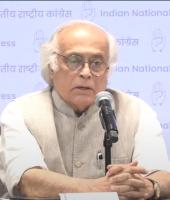
Congress general secretary in-charge communications Jairam Ramesh on Wednesday launched a scathing attack on the Narendra Modi government over the continuing rise in prices of essential commodities, accusing it of intensifying the financial distress of poor and middle-class families.
Demanding a white paper from Prime Minister Narendra Modi on the price situation, Ramesh sought a clear explanation of the government's strategy to contain inflation and provide relief to ordinary households struggling to balance their monthly budgets.
In a strongly worded post on the social media platform X, Ramesh said inflation has become the overriding concern for households, with the rising cost of everyday necessities steadily eroding their purchasing power.
He pointed out that prices of a wide range of consumer products, including mobile phones, televisions, biscuits and salt, were also increasing, while milk had already become more expensive and ghee and cooking oils continued to add to the burden on consumers.
The Congress leader also drew attention to the growing practice of manufacturers reducing the weight or quantity of products in packets without proportionately lowering their prices. This phenomenon, commonly known as shrinkflation, effectively means that consumers are paying more for smaller quantities of goods, further aggravating the pressure on household expenditure.
Citing inflation figures, Ramesh claimed that retail inflation had risen to 6.09 per cent in October, while food inflation had touched 8.94 per cent. He pointed out that retail inflation had crossed the Reserve Bank of India's upper tolerance limit of six per cent for the first time in the current Consumer Price Index series. He also cited wholesale inflation of 12.29 per cent, describing it as the highest recorded under the new Wholesale Price Index series based on the 2022-23 base year.
Arguing that the inflationary pressure was extending beyond household consumption, Ramesh said rising input costs were also affecting businesses and production operations. He referred to figures suggesting that monthly household expenditure had increased by more than 20 per cent for 61 per cent of families compared with their earlier spending, underlining the extent of the financial strain being experienced by ordinary consumers.
The Congress leader further warned that higher borrowing costs could compound the difficulties of households already struggling with rising prices. Referring to the Reserve Bank's October monetary policy decision, he said the 0.25 percentage point increase in the repo rate to 5.50 per cent had prompted several banks to raise lending rates, including those applicable to home loans. He also flagged the possibility of another rate increase in December, warning that this could push up equated monthly instalments (EMIs) and leave families with even less disposable income.
Ramesh maintained that poor and middle-class households were being squeezed from both sides, as the cost of essential commodities and loan repayments continued to rise while family incomes remained under pressure. The cumulative impact of expensive food items, higher prices of consumer goods and increased borrowing costs, he argued, was making it increasingly difficult for families to meet their everyday financial commitments.
Taking a sarcastic swipe at the Prime Minister, Ramesh referred to him as the country's 'Pravachan Mantri' and questioned how long poor and middle-class families would be expected to bear the double burden of inflation. He demanded that Modi publish a white paper explaining the reasons behind the persistent rise in prices and detailing the concrete steps his government proposed to take to bring inflation under control.
Invoking the BJP's earlier promise of 'achhe din', the Congress leader asked how long people would have to endure what he described as 'bure din' because of rising prices. He concluded his political attack with the slogan: "Bahut hui mehngai ki maar, ab jawab de Modi sarkar."
Rising prices have remained a politically sensitive issue in India, particularly because lower-income households spend a larger proportion of their earnings on food and other essential commodities.
Increases in the prices of milk, edible oils, cooking essentials and frequently purchased consumer goods can substantially erode disposable incomes. For families servicing home loans and other borrowings, higher lending rates add another layer of financial pressure.
Ramesh's latest attack seeks to turn the growing cost-of-living concerns into a broader political challenge for the Modi government, questioning its record on inflation and demanding accountability over the gap between the promise of economic relief and the financial realities confronting ordinary households.
000