When a newsroom keeps returning to a grieving family, a forgotten village or an unanswered question, democracy gains something no publicity campaign can supply: a witness who will not look away. That stubborn commitment defines eNewsroom’s journey and explains why India must stand behind independent journalism, reports Ujjwal K Chowdhury from Kolkata.
The Courage to Keep Returning
Founded in 2017 by journalist couple Shahnawaz Akhtar and Shabina Akhtar, whose professional experience included The Telegraph and DNA, eNewsroom chose a demanding path. Its focus reached beyond metropolitan news agendas into smaller cities and overlooked communities, particularly in Bengal, Jharkhand, Madhya Pradesh and Rajasthan.
The founders describe their undertaking as “a media with a conscience”. Its strength has been the patience to investigate and follow through. Reporting on farmers’ movements, hunger deaths, communal lynching, the Citizenship Amendment Act and National Register of Citizens, COVID-related healthcare failures, and citizenship and electoral-roll disputes has kept human consequences at the centre of public debate.
Its sustained coverage of the Faizan Ahmed death case at IIT Kharagpur illustrates that commitment. Families seeking answers need journalists willing to return after the first headline fades.
“Our journalism is ground first,” says Shabina. Regional knowledge, public records and persistent follow-ups underpin work now extending into video and podcasts. A small newsroom’s reach can grow without surrendering its responsibility to the people it covers.
Gandhi Still Has Questions for Us
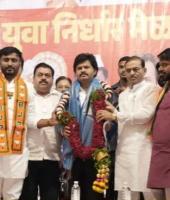
On Saturday, October 3, 2026, eNewsroom brought that responsibility into public discussion at Kolkata’s National Library, Bhasha Bhavan. Its conclave, “Gandhi the Journalist: Why India Needs His Media Vision Today”, connected the platform’s approaching decade with a larger debate about the purpose of news.
Speakers included former Prasar Bharati CEO Jawhar Sircar, author and columnist Rasheed Kidwai, Alt News co-founder Pratik Sinha and senior journalist Arfa Khanum Sherwani. Veteran journalists Abdul Aziz and Kamal Nayan Chapria were honoured.
Sircar recalled Gandhi’s journalism through Indian Opinion, Young India, Navjivan and Harijan. Across languages, these publications helped make public communication an instrument of social change.
His comparison with today’s commercial media raised a difficult question: how freely can a newsroom examine powerful institutions when its revenues depend heavily on advertisers or government patronage?
Editorial independence requires financial arrangements that protect the freedom to ask uncomfortable questions.
The Algorithm Has Its Own Interests
Against concerns about compromised television coverage and financially strained newspapers, Sinha examined a newer concentration of power: the platforms through which digital journalism reaches its readers.
Social networks associated with Mark Zuckerberg and Elon Musk have opened enormous opportunities for participation. Yet visibility depends on privately controlled algorithms and commercial priorities. A journalist may publish an important investigation and still struggle to get it before the people affected.
Referring to Cambridge Analytica, concerns about voter micro-targeting around the Special Intensive Revision process, and digital censorship, Sinha warned against assuming that social media automatically guarantees independence.
His argument pointed towards the need for alternative media models. Direct relationships with readers, reliable funding and distribution beyond a single platform become essential when algorithmic decisions can determine whether journalism travels or disappears.
The public importance of a story cannot be measured by how efficiently it captures attention.
Give Citizens Their Voice Back
Kidwai lamented the shrinking space for a strong citizen voice. Meaningful conversation, he argued, deserves greater weight than virality. News should help people understand their circumstances and participate in decisions affecting their lives.
Sherwani grounded that argument in contrasting coverage of the NEET paper-leak protests and movements questioning SIR and the Chief Election Commissioner. She highlighted the contribution of independent digital journalists and YouTubers in bringing such concerns before wider audiences.
She also praised The Wire, Newslaundry, The Indian Express and The Hindu for reporting on questions concerning electoral administration, voter enrolment and deletions from electoral rolls.
The democratic value of such reporting lies in making evidence available for scrutiny. A student’s examination, a family’s citizenship and a citizen’s voting rights deserve rigorous investigation, accessible explanation and sustained follow-up.
Independence Needs Public Commitment
Several participants pledged support for independent journalism, including eNewsroom. Their response gave the evening’s arguments a practical direction.
An advertising-free newsroom funded by its readers offers citizens a way to support reporting whose priorities they value. Small, regular contributions can help pay for reporting journeys, document searches and the patient work of verification.
That support should accompany transparent accounts, clear corrections and editorial freedom from donors. Independence must mean questioning every party and institution with the same seriousness.
eNewsroom’s persistence offers reason for hope. Journalists continue to show up where answers are overdue. Citizens can help ensure they have the means to stay.
India’s democracy needs people who keep asking difficult questions. Keeping those journalists working is a responsibility the public must now share.
000