PUNE, Staff Reporter
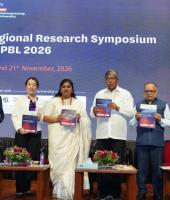
"Instead of relying on traditional rote-based methods, the need of the hour is to cultivate the ability among students to question, think independently and solve problems on their own. Project and Problem-Based Learning (PBL) is the true strength of the New National Education Policy (NEP), empowering youth to become job-creating entrepreneurs rather than mere job seekers," stated Maharashtra’s Minister of State for School Education Dr. Pankaj Bhoyar. Dr. Bhoyar was speaking as the Chief Guest at the inauguration of the 4th Regional Research Symposium on Project and Problem-Based Learning (PBL) for School Education, hosted by MIT Vishwaprayag University Solapur at IISER Pune. The symposium aims to foster stronger synergy between school education, higher education, and industry.
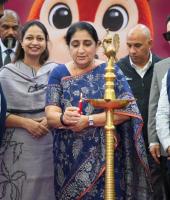
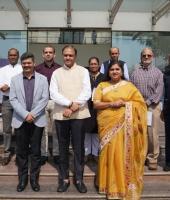
The inaugural ceremony was presided over by Prof. Swati Karad Chate, Executive President of MIT Vishwaprayag University, with Gajanan Patil, Chief Executive Officer of Pune Zilla Parishad who was present during this occasion as Guest of honour. Other distinguished dignitaries on the dais included Prof. Xiangyun Du, Director of the UNESCO Centre for Problem-Based Learning at Aalborg University, Denmark; K. Thyagarajan, Executive Vice Chairman of Agastya International Foundation; Prof. Gopalkrishna Joshi, Founder Vice-Chancellor of MIT Vishwaprayag University and Director Raghavendra Chate.
Commending the host institution, Dr. Bhoyar noted that MIT Group of Institutions has played a pivotal role in enriching Pune’s educational heritage as the 'Oxford of the East.' He remarked that MIT Vishwaprayag University has taken a significant stride toward realizing Founder Prof. Dr. Vishwanath D. Karad’s vision of harmonizing science and spirituality in education. "Presenting students with real-world problems and encouraging them to find solutions sparks curiosity and sharpens critical thinking. In the era of Artificial Intelligence (AI) and robotics, educators must harness technology to nurture student creativity," he urged.
Addressing the gathering, Gajanan Patil emphasized that Problem-Based Learning should not remain confined to engineering and higher education, stressing the urgent need to expand it to the school level through structured teacher training and capacity building.
In her presidential address, Prof. Swati Karad Chate underscored the importance of introducing research and innovative thinking early in schools to bridge the gap with higher education. "Problem-Based Learning cultivates critical thinking, creativity, collaboration and communication skills. Our pedagogy must align with the needs and challenges of Indian society, while adopting the world’s best educational practices, we must equally preserve Indian culture and values," she said.
Prof. Xiangyun Du elaborated on the vital role of PBL in driving sustainable educational transformation and holistic student development, while K. Thyagarajan highlighted the growing global adoption of problem-based methodologies in modern pedagogy.
The three-day symposium brings together leading educationists and researchers from Denmark, South Africa, Singapore, and India to deliberate on global and Indian best practices in project and problem-based learning. The core objective of the forum is to champion experiential learning driven by hands-on action, research, and collaboration. Earlier, Registrar Dr. Krishnakedar Gumaste delivered the welcome address and Shripriya Pratinidhi compered the event.
"The adoption of technologies like Artificial Intelligence (AI) has become inevitable across all sectors, including education. However, this emerging technology must amplify a student’s creativity rather than turning them into machines. Only teachers, through value-based education, can guide students to use AI for human welfare and national progress. Educators at premier institutions like MIT possess the strength to channel students' energy in a positive direction." — Dr. Pankaj Bhoyar, Minister of State for School Education
000