New Delhi, Agency
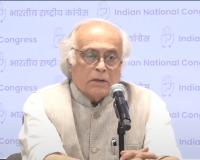
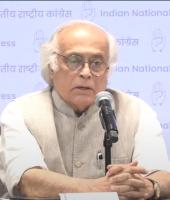
Congress leader Jairam Ramesh on Wednesday invoked the ancient political wisdom of Kautilya's Arthashastra to launch a fresh attack on Prime Minister Narendra Modi over the government's efforts to secure a two-thirds majority in the Lok Sabha for the proposed delimitation legislation, asking him to choose dialogue and consensus-building instead of political manoeuvring.
Referring to Kautilya's four principles of statecraft - 'Sam, Daam, Dand, Bhed' - Ramesh accused the Prime Minister, sarcastically describing him as the "self-styled Chanakya", of resorting to the last three methods in his pursuit of the constitutionally required majority, while ignoring the first, which signifies persuasion and conciliation.
"In his desperate search for a super-tainted two-thirds majority in the Lok Sabha to get the diabolical delimitation bills passed, the self-styled Chanakya has been resorting to the last three and has failed. Why not he give the first a chance?" Ramesh said in a post shared in a media group.
The Congress leader's remarks were a reference to the repeated appeals by Congress president and Leader of the Opposition in the Rajya Sabha Mallikarjun Kharge for an all-party meeting to discuss the proposed delimitation exercise before the government takes any further legislative steps.
Ramesh pointed out that Kharge had written to Modi four times in the past seven months - on April 11, July 16, August 27 and October 16 - seeking consultations with political parties on the issue. He alleged that none of these communications had even received a routine acknowledgement from the Prime Minister.
The confrontation over delimitation has intensified following the defeat of the Constitution (131st Amendment) Bill in the Lok Sabha on April 17, when the legislation failed to secure the constitutionally mandated two-thirds majority of members present and voting.
The proposed constitutional changes have become a major flashpoint between the government and the Opposition, with the Congress arguing that delimitation is not merely an exercise in redrawing electoral constituencies but one that could fundamentally alter the balance of political representation among states.
Kharge has repeatedly insisted that an exercise with such far-reaching consequences for the country's parliamentary and federal structure cannot be undertaken without meaningful consultations with all political parties and other stakeholders. In his October 16 communication, he urged Modi to convene an all-party meeting and cautioned against introducing another Constitutional Amendment Bill without adequate deliberations.
The Congress has particularly raised concerns that states which have successfully implemented population-control measures could face adverse consequences in terms of their relative representation in Parliament if delimitation is undertaken on the basis of population without safeguards. The party has also maintained that the implementation of women's reservation should not be made contingent on an immediate, comprehensive delimitation exercise.
By drawing upon Kautilya's four principles, Ramesh sought to turn the government's search for a parliamentary majority into a broader political argument about the need for consultation and consensus on constitutional questions. His central message was that the Prime Minister should embrace 'Sam' - persuasion and dialogue - rather than rely on political pressure and manoeuvring to push through legislation that could have lasting implications for India's federal balance and democratic representation.
000