- Op-Ed
- THE MOST DANGEROUS SURGICAL STRIKE
THE MOST DANGEROUS SURGICAL STRIKE
The Day the Prime Minister Decided to Face a Press Conference, A political satire on power, silence, microphones and the terrifying democratic weapon called a question
On

By Prof Ujjwal K Chowdhury
There are moments in the life of a nation when history holds its breath.
Wars do that.
Elections occasionally do that.
Revolutions certainly do that.
And, in very exceptional circumstances, so does an unscripted press conference.
The Prime Minister had faced many dangers.
He had faced elections, hostile speeches, inconvenient statistics, angry farmers, unemployed graduates, opposition marches, foreign editorials, parliamentary disruptions, comedians, cartoonists and social media.
He had survived all of them.
But one enemy refused to surrender.
The question mark.
It was everywhere.
On television.
In newspapers.
On social media.
At university seminars.
Inside foreign magazines.
At opposition rallies.
In jokes.
In memes.
In drawing-room conversations.
In WhatsApp groups that had not yet been completely conquered by good morning messages.
The question was simple.
That was precisely what made it dangerous.
When will the Prime Minister hold a real, open press conference?
Not an interview where the interviewer looks grateful for being permitted to inhale.
Not a conversation where questions arrive with the obedience of schoolchildren at morning assembly.
Not an encounter where every comma has received security clearance.
A press conference.
Journalists.
Questions.
Follow-up questions.
No script.
No teleprompter.
No escape route disguised as a commercial break.
It was barbaric.
Initially, the Prime Minister ignored the matter.
After all, ignoring unpleasant questions is one of the oldest instruments of statecraft.
Kings had curtains.
Dictators had prisons.
Modern governments have communication strategy.
But some questions behave like monsoon frogs.
Suppress one and twelve begin croaking.
Ban twelve and seventy appear on YouTube.
Call seventy anti-national and seven hundred start trending.
Democracy is terribly inefficient that way.
It keeps producing questions after the government has already produced answers.
First, a few journalists mentioned the absence of press conferences.
Then opposition leaders discovered the subject.
Then foreign correspondents noticed.
Then international newspapers began writing about it.
Then comedians got involved.
That was when the situation became serious.
A government can survive an editorial.
A joke is more dangerous.
An editorial must be read.
A joke only needs to be understood.
Power fears laughter because laughter does not apply for permission.
The Prime Minister began hearing the question everywhere.
At cabinet meetings.
At public rallies.
During diplomatic visits.
During ceremonial handshakes.
Inside aircraft cabins.
Behind polite smiles.
Eventually, he feared that even if he visited a temple seeking spiritual peace, the deity might lean forward and ask:
“Son, one small question before the blessing. When exactly is the press conference?”
That would be uncomfortable.
One can ignore journalists.
Ignoring divinity requires a more elaborate media strategy.
For a long time, domestic criticism remained manageable.
Much can be managed domestically.
History can be edited.
Statistics can be curated.
Headlines can be softened.
Debates can be populated.
Narratives can be manufactured.
Hashtags can be mass-produced.
Silence can be called discipline.
Criticism can be called conspiracy.
Failure can be called transition.
Confusion can be called reform.
And if necessary, yesterday can be redesigned by tomorrow afternoon.
The modern state no longer changes reality. It changes the caption.
But foreign visits were different.
Foreign visits were supposed to be therapeutic.
There were red carpets.
There were photographs.
There were handshakes.
There were large auditoriums.
There were applause lines.
There were diaspora crowds.
There were embraces of geopolitical significance.
There were cameras carefully positioned to capture history from its most flattering angle.
The Prime Minister enjoyed diplomacy.
Diplomacy is a beautiful art.
You speak for twenty minutes and nobody is permitted to interrupt.
Then came the whispers.
Foreign journalists had begun asking uncomfortable questions.
Reports mentioned press freedom.
Questions arose about institutions.
Questions arose about minorities.
Questions arose about economic performance.
Questions arose about political centralisation.
Questions arose about business-government proximity.
Questions arose about why the world’s largest democracy appeared so reluctant to permit the world’s simplest democratic ritual.
Questions.
Always questions.
The Prime Minister began to suspect that global diplomacy had been infiltrated by punctuation.
Even more irritating was the Leader of the Opposition.
The man appeared biologically incapable of avoiding journalists.
He spoke to them in India.
He spoke to them abroad.
He spoke to them outside Parliament.
He spoke to them inside party offices.
He spoke while walking.
He spoke while sitting.
He produced charts.
He produced documents.
He produced slides.
Sometimes he even appeared to enjoy follow-up questions.
Clearly, something was wrong with him.
A normal politician loves cameras.
This man seemed comfortable with microphones.
There is an important distinction.
A camera records your presence.
A microphone records your answer.
Every politician loves visibility. Accountability is a more acquired taste.
The Prime Minister suspected strategy.
Of course it was strategy.
Politics is the only profession where having breakfast can be strategic.
The Opposition leader was deliberately holding press interactions to draw attention to the Prime Minister’s avoidance of them.
It was infuriatingly effective.
Some people become popular by displaying their strengths.
Others do so by turning your weakness into a national festival.
The Prime Minister could withstand accusations.
What he disliked was comparison.
Comparison is democracy’s cruellest instrument.
It places two politicians on the same table and allows citizens to notice things.
The Opposition leader’s repeated media interactions were beginning to look like a neighbourhood wrestler performing push-ups outside the home of a man who had spent years explaining why wrestling was unnecessary.
Still, the Prime Minister might have managed.
Power has insulation.
Then came the security guard.
One day, while passing through a corridor, he overheard two security personnel talking.
One apparently said something like:
“Such a fearless leader, yet not one proper press conference?”
The Prime Minister continued walking.
But the sentence followed him.
It entered the lift.
It entered the car.
It entered the office.
It entered dinner.
It entered the bedroom.
Mockery had breached the perimeter.
This was unacceptable.
A ruler can dismiss a newspaper.
He can accuse an opposition leader.
He can attack an activist.
He can ignore an academic.
But what does he do with a security guard’s sarcasm?
Order an inquiry into humour?
Form a committee on unauthorised irony?
Issue guidelines governing laughter in sensitive zones?
The most secure government becomes insecure the moment people begin laughing at it.
That evening, something changed.
The Prime Minister began suspecting everybody.
He met an industrialist.
Was that man thinking about the missing press conference?
He met a foreign leader.
Was that smile diplomatic or sarcastic?
He walked past party colleagues.
Why were they so silent?
Was their silence loyal?
Or informed?
Even obedience began to look subversive.
Absolute power has many disadvantages.
One is that eventually nobody tells you what they think.
The second is that you start imagining what everybody thinks.
His advisers rushed to reassure him.
That is what advisers around powerful people are often hired to do.
Not to reduce danger.
To reduce awareness of danger.
“Sir, the media ecosystem is largely supportive.”
“Sir, hostile journalists have limited reach.”
“Sir, social media can be managed.”
“Sir, narratives can be countered.”
“Sir, criticism can be exposed.”
“Sir, our supporters will handle it.”
Someone presumably mentioned institutions.
Someone probably mentioned agencies.
Someone certainly mentioned the digital machinery.
There were enough mechanisms to defeat reality several times before breakfast.
The Prime Minister relaxed.
Briefly.
Flattery is political anaesthesia: the patient feels nothing while the disease progresses.
The advisers meant well.
Flatterers usually do.
They do not lie because they hate the ruler.
They lie because proximity to power is more profitable than proximity to truth.
The courtier’s job is not to hold up a mirror.
It is to polish the ruler’s portrait.
So the Prime Minister was reminded of his victories.
His popularity.
His electoral strength.
His communication genius.
His global image.
His organisational machinery.
His vast supporter base.
His disciplined party.
His friendly commentators.
His tireless digital warriors.
Surely one press conference could not matter.
But there was one institution no government had yet managed to fully control.
Conscience.
It has no headquarters.
No budget.
No spokesperson.
No known funding source.
No registration number.
No chief executive.
And, annoyingly, it does not respond to notices.
Conscience waits.
It waits until midnight.
Then it becomes the Opposition.
“Do it,” it whispered.
“Hold the press conference.”
“Show them.”
“Demonstrate your mastery of economics.”
“Explain employment.”
“Explain institutions.”
“Explain education.”
“Explain agriculture.”
“Explain foreign policy.”
“Explain everything.”
The Prime Minister turned in bed.
Conscience continued.
“You have spoken of surgical strikes.”
“Here is your greatest one.”
“Enter the enemy camp.”
“Face the microphones.”
“Answer the questions.”
The phrase appealed to him.
Surgical strike.
Excellent.
It sounded decisive.
Heroic.
Televisual.
Perhaps the press conference could be reframed as combat.
Political communication always improves when ordinary activities are described as military operations.
A meeting becomes a mission.
An election becomes a war.
A policy becomes a revolution.
A slogan becomes a movement.
A press conference could therefore become a surgical strike.
The Prime Minister saw himself entering the hall like Arjuna entering Kurukshetra.
Except the enemy carried notebooks.
And laptops.
And microphones.
And memories.
Questions are dangerous because they do not attack from across the border.
They cross directly into the mind.
A missile can be intercepted.
A question can be repeated.
A missile leaves a crater.
A bad answer leaves a clip.
The nights became worse.
The Prime Minister dreamt of journalists.
They chased him through corridors.
Microphones emerged from cupboards.
Press cards fell from the ceiling.
The Leader of the Opposition appeared holding a PowerPoint.
Independent journalists stood behind curtains.
Foreign correspondents materialised at airports.
Even the peacocks seemed suspicious.
Their cries began sounding like:
“Press conference! Press conference!”
The cows appeared equally politicised.
Their mooing carried disturbing undertones of accountability.
This was becoming a national security issue.
The final stage of political insecurity begins when even birds appear editorially hostile.
At last, the Prime Minister summoned his innermost circle.
These were not ordinary advisers.
These were men who looked as though they had passwords to satellites.
They entered carrying folders thick enough to stop bullets.
A secret operation began.
Risk assessment.
Scenario planning.
Question mapping.
Journalist profiling.
Response architecture.
Damage mitigation.
Exit protocols.
Backup narratives.
Emergency hashtags.
No military operation had been prepared with greater seriousness.
Someone suggested a recorded interview.
Very safe.
Someone suggested pre-approved questions.
Extremely safe.
Someone suggested inviting only “responsible” journalists.
Safer still.
Someone suggested allowing questions but no follow-ups.
Brilliant.
Someone suggested allowing follow-ups but only to answers already prepared.
Masterstroke.
Someone suggested screening the journalists’ social media histories.
Excellent.
Another suggested seating friendly journalists in the front row where television cameras could identify democracy immediately.
But nobody said:
“Sir, why not simply hold a completely open press conference?”
Such recklessness had no place in government.
Because the greatest risk was not what the journalists might ask.
The greatest risk was what the Prime Minister might say.
There had been uncomfortable moments abroad.
Unscripted situations were unpredictable.
Teleprompters are loyal.
Questions are not.
A teleprompter never asks, “But you didn’t answer my question.”
Meanwhile, social media had discovered blood.
Memes multiplied.
One became ten.
Ten became ten thousand.
The Prime Minister saw himself turned into jokes, GIFs, clips, parodies and captions.
The internet does not respect constitutional office.
A meme will put a crown on a donkey and a donkey on a throne without seeking legal advice.
This is why authoritarian instincts fear humour.
Humour eliminates distance.
It converts majesty into material.
And once the ruler becomes content, the throne loses several inches of height.
One night, exhausted by all this, the Prime Minister fell asleep.
Then came the dream.
He entered a room full of senior officials.
He looked at them.
They looked at him.
He announced:
“We will hold an open press conference.”
Silence.
One officer dropped his pen.
Another looked pale.
A third appeared to calculate his retirement date.
The expressions around the table resembled those of election administrators who had suddenly been instructed:
“Gentlemen, this time make everything unquestionably fair.”
But the order had been issued.
Invitations went out.
Indian media.
International media.
Digital media.
Independent journalists.
Television anchors.
News agencies.
Foreign correspondents.
YouTubers.
The announcement exploded.
“HISTORIC!”
“UNPRECEDENTED!”
“DEMOCRACY’S BIG DAY!”
Studios installed countdown clocks.
Commentators compared the event to the moon landing.
Some historians began researching whether an Indian Prime Minister answering unscripted questions qualified as intangible cultural heritage.
The friendly media panicked.
They knew the stakes.
They had spent years explaining the wisdom of avoiding press conferences.
Now they might have to explain the wisdom of holding one.
Ideological flexibility is exhausting.
The devotees were equally worried.
They trusted the leader completely.
They trusted journalists considerably less.
Most of all, they feared the terrible moment when complete trust encountered an unexpected supplementary question.
The hardest job in propaganda is not inventing today’s story. It is preventing today’s evidence from assassinating yesterday’s story.
Finally, the day arrived.
Vigyan Bhavan was packed.
Cameras stood ready.
Microphones waited.
Notebooks opened.
Laptops glowed.
Journalists whispered.
Foreign correspondents rehearsed questions.
Independent reporters prepared follow-ups.
Television anchors practised facial expressions suitable for historic democracy.
Then the Prime Minister entered.
He attempted a smile.
The smile appeared.
Looked around.
Submitted its resignation.
He folded his hands.
They suddenly seemed unusually heavy.
He walked towards the stage.
One step.
Two steps.
Three steps.
The hall looked enormous.
The microphones looked larger.
The journalists looked alert.
Alert journalists are dangerous.
Friendly ones look grateful.
He began reciting prayers internally.
But fear is aggressively secular.
It respects neither temple nor text.
Fear recognises only adrenaline.
The Prime Minister continued.
Inside his ceremonial clothing, perspiration gathered with federal ambition.
At last, he reached the chair.
Officials immediately placed files before him.
Employment.
Agriculture.
Inflation.
Education.
Foreign affairs.
Minorities.
Institutions.
Economy.
Welfare.
Industry.
National security.
Press freedom.
Every conceivable topic.
The bureaucracy had prepared answers to every possible question.
This is one of the great achievements of administration.
It can prepare a perfect answer to every question except the one that is actually asked.
The moderator opened proceedings.
Hands shot up.
The Prime Minister looked at them.
Hundreds of raised hands.
For years, raised hands at rallies had meant applause.
This was different.
These hands wanted something.
A journalist stood.
“Prime Minister, what is your government’s plan to address unemployment among young people?”
File.
Page.
Briefing note.
Another journalist rose.
“What do you say to criticism about the independence of institutions?”
Different file.
Another.
“Why are farmers still protesting?”
Another.
“What is being done about the condition of public education?”
Another.
“How do you respond to concerns regarding minority rights?”
Another.
“What is your relationship with major corporate groups, and how do you answer allegations of cronyism?”
Another.
“Why has press freedom become such a matter of international concern?”
Another.
“What is your response to criticism from abroad?”
Another.
“Why are so many Indians still dependent on food support?”
Another.
“What does economic growth mean if large sections remain economically insecure?”
Another.
“Why have you avoided open press conferences for so long?”
Then came the most dangerous phrase in journalism:
“Prime Minister, that was not my question.”
Follow-up.
Nothing in political mythology had adequately prepared him for the follow-up.
A prepared answer can survive a question.
A follow-up examines the corpse.
He turned towards the moderator.
The moderator looked helpless.
The microphones advanced spiritually.
More hands appeared.
More questions.
Employment.
Education.
Examinations.
Police action.
Protests.
Civil liberties.
Parliament.
Opposition.
Media.
Farmers.
Workers.
Students.
Women.
Minorities.
Foreign policy.
Corporate power.
Election integrity.
Institutional autonomy.
Accountability.
The questions ceased to be sentences.
They became weather.
Then sound.
Then thunder.
“Prime Minister!”
“Prime Minister!”
“Please answer!”
“You have not answered!”
“What about—”
“Can you clarify—”
“Why—”
“When—”
“How—”
The Prime Minister searched the files.
Wrong page.
Wrong answer.
Old data.
New question.
Missing annexure.
Classified note.
Talking point unavailable.
Server not responding.
Narrative temporarily under maintenance.
At that moment, the teleprompter stood several feet away.
Silent.
Loyal.
Useless.
For the first time, technology had reached the limits of political civilisation.
Democracy was demanding something primitive.
A citizen asks.
A ruler answers.
No orchestra.
No slogan.
No background score.
No edited montage.
No cheering crowd.
No anchor translating the answer into patriotism.
No spokesperson arriving later to explain what the leader actually meant.
Just a question.
And an answer.
Nothing in between.
That is why the smallest word in democracy is also one of its most dangerous:
Why?
Why this policy?
Why this silence?
Why this decision?
Why this failure?
Why this contradiction?
Why this privilege?
Why this suffering?
Why should we believe you?
Four letters can dismantle four hours of political theatre.
A full stop belongs to authority. A question mark belongs to democracy.
Suddenly there was confusion.
The Prime Minister appeared unwell.
Officials rushed forward.
Security moved.
Doctors were called.
Someone shouted for space.
A stretcher arrived.
Cameras swung wildly.
Television channels instantly discovered breaking-news graphics.
The Prime Minister was taken out.
An ambulance waited.
The doors closed.
The siren screamed.
Delhi traffic moved aside.
But inside the ambulance, another sound was louder.
“Answer.”
“Answer.”
“Answer.”
He closed his eyes.
The voices multiplied.
First a thousand.
Then ten thousand.
Then a million.
Then tens of millions.
Farmers appeared.
Workers appeared.
Students appeared.
Teachers appeared.
Small traders appeared.
Job-seekers appeared.
Women appeared.
Minorities appeared.
Pensioners appeared.
Entrepreneurs appeared.
Taxpayers appeared.
Parents appeared.
Citizens appeared.
Supporters appeared.
Critics appeared.
Even the politically silent appeared.
All had questions.
Some still admired him.
Some disliked him.
Some had voted for him.
Some had voted against him.
Some would vote for him again.
That was not the point.
Democracy is not a fan club.
The citizen does not surrender the right to question merely because he once surrendered a vote.
A ballot elects a government. It does not adopt one.
The Prime Minister opened his eyes.
The questions were still there.
Hundreds of millions of them.
Questions about jobs.
Prices.
Schools.
Hospitals.
Taxes.
Farm incomes.
Examinations.
Corruption.
Corporate influence.
Freedom.
Police.
Institutions.
War.
Peace.
Promises.
Silences.
Facts.
Future.
He suddenly understood something terrible.
Power can manage audiences.
It cannot permanently manage citizenship.
You can dominate Parliament.
You can dominate television.
You can dominate party structures.
You can dominate advertisements.
You can dominate social media trends.
You can redesign institutions.
You can rename roads.
You can rename cities.
You can rename schemes.
You can rename failures.
You can rename yesterday.
You can purchase airtime.
You can manufacture applause.
You can choreograph interviews.
You can cultivate influencers.
You can build armies of defenders.
You can make criticism expensive.
You can make silence fashionable.
You can make loyalty profitable.
You can even convince millions that questions themselves are acts of betrayal.
But sooner or later, somebody asks one.
Then another.
Then another.
Because democracy possesses an indestructible defect.
Citizens expect explanations.
No election removes that defect.
No majority cures it.
No charisma abolishes it.
No media strategy buries it permanently.
The magnificent palace of political communication ultimately rests upon a tiny, inconvenient foundation:
accountability.
And accountability is embarrassingly simple.
It requires neither nationalism nor spectacle.
Neither choreography nor mythology.
It requires a chair.
A microphone.
A journalist.
A citizen.
A question.
An answer.
Perhaps this is why the most dangerous surgical strike available to a powerful Prime Minister is not directed across a border.
It is directed inward.
Against the walls constructed around power.
Against the comfort of controlled conversations.
Against the addiction to applause.
Against the narcotic of flattery.
Against the belief that popularity can substitute for scrutiny.
Against the illusion that victory means immunity.
Against the fear of being asked:
“Why?”
No aircraft are necessary.
No commandos.
No satellites.
No war room.
No classified maps.
No patriotic soundtrack.
No exploding graphics on television.
Only courage.
The kind of courage democracy measures differently from politics.
Political courage says:
“Listen to me.”
Democratic courage says:
“Question me.”
Political power wants the last word.
Democracy refuses to provide one.
Because a republic is not truly alive when rulers speak.
Rulers have always spoken.
Kings spoke.
Emperors spoke.
Dictators spoke.
Colonial governors spoke.
Propagandists spoke.
The real test begins when rulers listen.
The real test deepens when citizens interrupt.
The real test becomes democracy when somebody asks an inconvenient question and power cannot arrest the punctuation.
That may be the secret fear behind every avoided microphone.
The journalist is not frightening.
The camera is not frightening.
The hall is not frightening.
Even the question is not frightening.
What frightens power is the possibility that a citizen may hear the answer and ask:
“But is that true?”
And then the fortress trembles.
Because the ruler suddenly discovers that democracy was never about how loudly he could speak.
It was always about whether the people could make him answer.
When power finally fears a microphone more than an enemy, democracy has already delivered its verdict: no throne is invincible when millions stop applauding, start asking, and demand answers.
0000
Tags:
About The Author
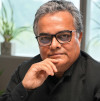
Ujjwal K. Chowdhury is a senior academic, institution-builder, and political analyst based out of Kolkata, India.
Latest News
02 Sep 2026 18:13:31
By Prof Ujjwal K Chowdhury
Blurb. A mountain of ice and rock collapsed into a Himalayan headwater and sent a...
ePaper
Advertisement