
Umbraj / Anil Kadam
Opposition to the Adani Group's 1,500 MW Tarali Pumped Storage Energy Project, being developed in the ecologically rich surroundings of Tarali Dam in Patan taluka, has now intensified into an on-ground protest. Allegations of extensive environmental damage, suspected illegal excavation, tree felling, blasting and questions over compliance with environmental regulations have heightened tensions in the Tarali region.
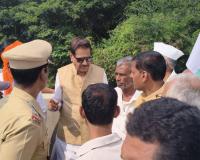
Against this backdrop, actor and environmental activist Sayaji Shinde, along with young activist Vivekanand Patil, openly opposed the project and visited the ongoing construction site near Tarali Dam on Sunday (November 15). Their visit triggered considerable discussion among environmentalists, social activists and local residents.
When Shinde and Patil arrived to inspect the ongoing project work, a large number of environmental activists and residents from several surrounding villages gathered at the site. Citizens expressed concerns over the potential environmental impact, tree felling and construction activities in the hilly region. Considering the sensitivity of the situation, a heavy police force from Umbraj and Tarale police stations was deployed, with police personnel present throughout the dam area.
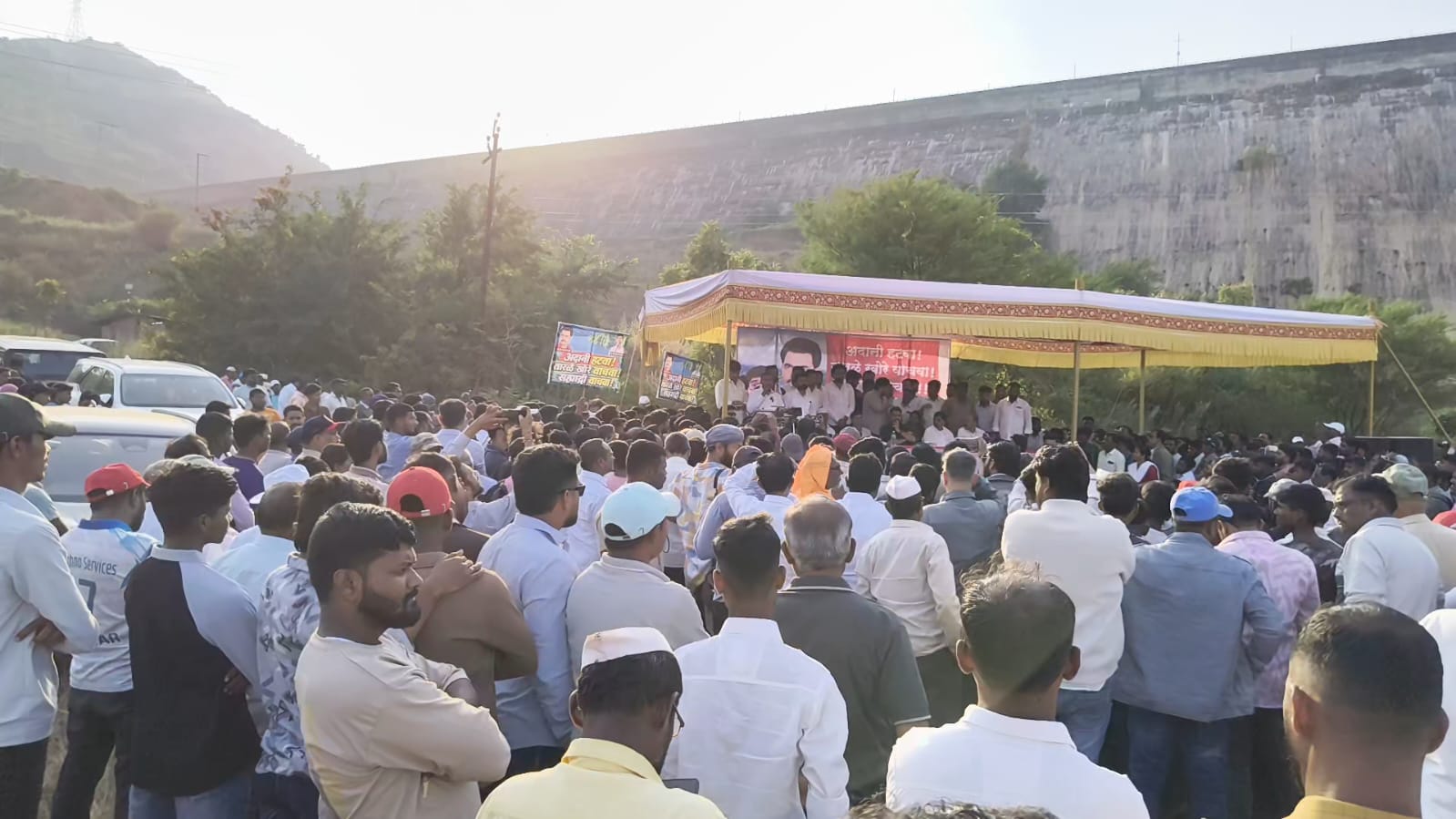
Public Meeting Near the Dam; Tree Felling Becomes a Major Concern
Following the site inspection, a public meeting was held in front of Tarali Dam, where Sayaji Shinde articulated his concerns over environmental destruction. He stated that environmental damage cannot be ignored in the name of development. He firmly demanded that if trees had been felled without the necessary permissions, those responsible must be identified and prosecuted under the law.
The activists also called for government authorities to conduct an independent inspection rather than allowing the issue to remain confined to allegations and counter-allegations. They demanded verification of tree-felling permissions and an investigation into possible violations of environmental regulations.
In this connection, Shinde submitted a representation at Tarale Police Station, seeking action against those responsible.
₹5,675 Crore Project Faces Fresh Controversy Over Documents
Meanwhile, the opposition to the Tarali project has taken a significant legal turn. Alleging irregularities in the environmental clearance process, misleading information submitted to government authorities and the use of allegedly false affidavits, Sayaji Murutrao Shinde filed a nine-page written complaint at Umbraj Police Station on November 15.
The complaint names Adani Green Energy Limited (AGEL), Adanirenewable Energy One Limited (ARE1L), senior officials associated with the companies, environmental consultancy agencies and other concerned individuals. It seeks verification of documents submitted during the project's approval process and legal action against those found responsible.
One of the most significant allegations concerns discrepancies in the project's financial valuation. According to the complaint, the project's cost was mentioned as ₹5,675 crore in environmental clearance documents. However, an affidavit attributed to a senior company official allegedly mentions the project cost as ₹56.75 crore.
The complainant has questioned how such a hundredfold discrepancy appeared in two official documents, whether incorrect information was submitted in the affidavit and whether the discrepancy was deliberate. The complaint demands a thorough investigation to establish the facts.
Was the Classification of Forest Land Changed?
The complaint has also raised serious objections regarding the classification of land that is likely to be submerged under the project reservoir.
According to the complaint, the final Environmental Impact Assessment (EIA) report describes the land beneath the proposed reservoir as non-forest land. However, the complainant has sought an independent verification of whether the concerned land qualifies as deemed forest.
The complaint specifically calls for examination of land records, Forest Department documents, revenue records and relevant government permissions concerning areas such as Nivade, Tondoshi, Kamble, Jalu, Daphalwadi and Savdhar.
Whether incorrect information about the nature of the land was submitted to obtain the necessary clearances has emerged as an important issue requiring investigation.
Questions Raised Over Sahyadri Wildlife Areas
Considering the project's geographical relationship with the Sahyadri Tiger Reserve and wildlife-sensitive zones, the complaint has also questioned whether wildlife protection regulations have been followed.
It seeks verification of the wildlife-related clearances, distance certificates and relevant maps required for the project.
The complainant has demanded an investigation into whether construction activities commenced while certain wildlife-related approvals were still pending. Questions have also been raised about whether the necessary permissions were obtained for excavation, drilling and blasting in the hilly areas, and whether the storage and use of explosives were properly authorised and documented.
Suspicion Over Excavation and Blasting Activities
The complaint has raised concerns regarding ongoing activities in Kamble, Tondoshi, Daphalwadi and Savdhar.
It seeks verification of compliance with environmental clearance conditions, the availability of mandatory blasting permissions and an official inspection report documenting the actual nature and extent of excavation at the sites.
Large energy projects require careful consideration of local ecosystems, water resources, forest wealth and wildlife habitats. In view of these concerns, demands are growing for an independent assessment by a panel of environmental experts.
Agricultural Land and Water Usage Also Under Scrutiny
The complainant has also questioned claims made in the project's final environmental report regarding the acquisition of private agricultural land and the potential impact on existing water users.
An objective investigation has been sought into the actual status of agricultural land, the possible impact on local farmers and the implications for existing irrigation systems.
Hearing the views of farmers, villagers and existing water users in the region will also be crucial in assessing the project's wider impact.
Copies of Complaint Sent to Six Government Authorities
Copies of the complaint filed by Sayaji Shinde have been forwarded to six authorities, including the Superintendent of Police, Satara; District Collector and District Magistrate, Satara; Deputy Conservator of Forests, Satara Forest Division; Chief Wildlife Warden and Additional Principal Chief Conservator of Forests, Maharashtra; concerned officials of the Maharashtra Pollution Control Board; and the regional office of the Ministry of Environment, Forest and Climate Change.
The complaint refers to various provisions of the Bharatiya Nyaya Sanhita, 2023, along with relevant laws concerning forest conservation, wildlife protection, environmental protection and explosives.
It seeks a detailed examination of the relevant documents, affidavits, environmental reports, clearance orders, Forest Department records and on-site work records, followed by appropriate legal action.
What Will Be the Next Step in the Protest?
Sunday's site inspection, public meeting near the dam and submission of representations to the police have once again brought the Tarali project into the spotlight.
On one hand, the 1,500 MW project is being pursued as an ambitious energy initiative to address the state's power requirements. On the other, serious objections are being raised at the local level over its potential environmental consequences.
Several questions now require clear answers from the administration: What specific permissions have been granted for tree felling in the project area? How many trees have actually been cut? Under what approvals are excavation and blasting activities being carried out? Have wildlife and environmental clearance conditions been followed? And what explains the alleged financial discrepancy in the project documents?
With Sayaji Shinde and Vivekanand Patil visiting the project site and publicly expressing their opposition, the issue has moved beyond written complaints and paperwork.
Attention is now focused on the next course of action by local residents, environmental activists and the concerned government authorities.
000
About The Author