By Ujjwal K. Chowdhury | Political Analyst & Senior Academic
India stands at a constitutional precipice. Two years after a humbling 2024 verdict stripped the Bharatiya Janata Party of its Lok Sabha majority and forced Narendra Modi into an uncomfortable coalition embrace, the ruling establishment has launched an audacious counter-offensive — a multi-front power consolidation drive that combines parliamentary arithmetic manipulation, defection engineering, constitutional amendment overreach, and street-level suppression of an explosive youth movement. The result is an India where the world's largest democracy is not merely stressed but structurally endangered.
THE ARITHMETIC OF DEPENDENCE: BJP's Coalition Straitjacket
The 2024 Lok Sabha verdict delivered a verdict the BJP did not expect and cannot comfortably live with. Having secured 303 seats in 2019, the party crashed to 240 in 2024 — 32 seats short of the 272-seat majority threshold. The NDA coalition stabilised at 293 seats only because of 16 seats contributed by N. Chandrababu Naidu's Telugu Desam Party (TDP) and 12 seats by Nitish Kumar's Janata Dal (United). Together, these two allies represent the thin parliamentary oxygen line keeping the government functional.
This dependency is qualitatively different from earlier coalition arrangements. Modi's third term government cannot pass legislation or push constitutional amendments without the explicit or tacit support of Naidu and Kumar. The TDP, in particular, retains extraordinary leverage: Andhra Pradesh's demands for Special Category Status, infrastructure funding, and Amaravati reconstruction have become perpetual bargaining chips that Delhi must pay. Nitish Kumar, a serial party-switcher who has crossed the floor more times than most politicians change governments, is perhaps less threatening — yet strategically unpredictable.
The BJP's response has been characteristically aggressive: neutralise Nitish by elevating him to the Rajya Sabha, removing him from Bihar's street politics while giving him a national platform drained of electoral consequence. For TDP, the calculation is different — the strategy is to so flood Parliament with defected legislators from opposition parties that TDP's numerical leverage diminishes to irrelevance, making Naidu more subservient to Delhi rather than the other way around.
THE DEFECTION FACTORY: Democracy's Open Wound
What is happening in Indian parliamentary democracy since mid-2025 and into 2026 is not merely political realignment. It is what political scientist Ronojoy Sen has aptly termed 'party absorption' — a systematic, centrally-engineered process of hollowing out opposition formations from within. The mechanism is brutally efficient: use the Enforcement Directorate, the CBI, and financial inducements to persuade elected legislators to defect en masse, invoking the Tenth Schedule's 'two-thirds merger' loophole that the 1985 anti-defection law inadvertently created.
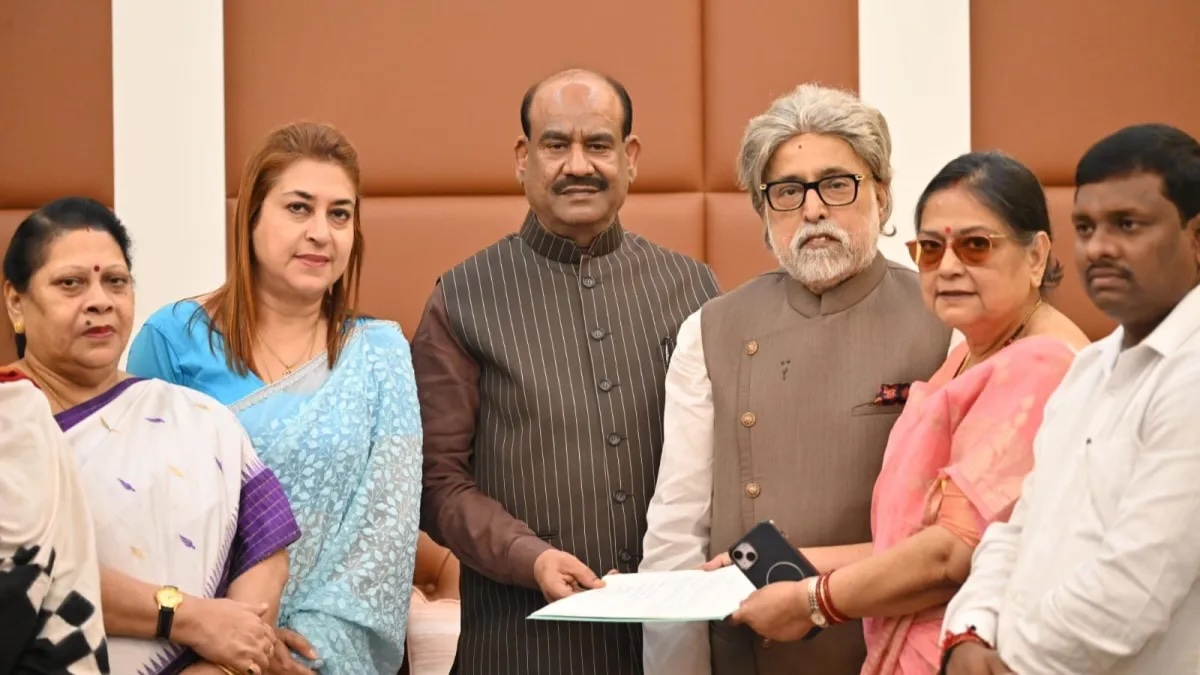
The Trinamool Congress has been the primary target. After the BJP's stunning 207-seat landslide in the May 2026 West Bengal assembly elections — ending Mamata Banerjee's 15-year dominance and defeating her in her own Bhabanipur stronghold — the TMC's Lok Sabha cohort became immediately vulnerable. Within days, 20 rebel TMC MPs in the Lok Sabha met Speaker Om Birla seeking a separate seating arrangement, announcing merger with an obscure entity called the Nationalist Citizens Party of India (NCPI). Separately, three TMC Rajya Sabha members have resigned their seats.
The Maharashtra template was replicated with even less subtlety. After the Shiv Sena (Uddhav Thackeray faction) was already split in 2022, the NCP of Sharad Pawar was cleaved in 2023. Now Sena (UBT)'s Lok Sabha cohort faces active poaching — ruling Shiv Sena's Pratap Sarnaik publicly hinted at welcoming defectors, while Sanjay Raut alleged on X that MPs were being offered Rs. 15 crore advances to jump ship. Seven AAP MPs have already shifted to the BJP in the Rajya Sabha. In the Rajya Sabha overall, the BJP-NDA combine is inching towards a functional working majority — a critical threshold for passing constitutional amendments.
Congress general secretary Jairam Ramesh articulated the opposition's assessment on June 17, 2026: Amit Shah was running a "calculated" inducement machine, targeting parties whose elected legislators — just two years after winning on anti-BJP platforms — were being bought or coerced into switching sides. "There are absolutely no limits to his depravity," Ramesh charged, while asserting the effort would ultimately fail. The charge speaks to a fundamental democratic crisis: people voted for parties on specific symbols and programmatic platforms. When elected individuals abandon those mandates, they perpetrate a fraud on the electorate — a fraud that courts and the Speaker's office have so far done little to arrest.
THE CONSTITUTIONAL ASSAULT: One Nation, One Defeat — For Now
In April 2026, the Modi government suffered its first ever defeat on a constitutional amendment in 12 years of rule. The Constitution (131st Amendment) Bill, 2026 — introduced as a three-bill package during a special Parliament session on April 16-18 — sought to expand the Lok Sabha from 543 to 850 seats, activate women's reservation through a delimitation-linked mechanism, and fundamentally restructure electoral geography in ways that critics argued were designed to shrink the political power of India's south.
On April 17, 2026, the government secured 298 votes in the Lok Sabha — but required 352 (two-thirds of 528 members present and voting). It fell short by 54 votes. Home Minister Amit Shah, in an over-hour-long speech, blamed the opposition for denying Indian women their rights. The opposition shot back that the government was using women's reservation as a Trojan horse for an electoral reengineering exercise. The companion Delimitation Bill and the Union Territories Laws (Amendment) Bill were subsequently withdrawn.
At the heart of the opposition's resistance was a fear grounded in demographic reality: India has not carried out a fresh inter-state seat reallocation since 1973, when boundaries were redrawn based on the 1971 Census. The current freeze — extended twice, most recently till after the first post-2026 Census — was deliberately designed to ensure states that controlled their populations were not penalised for it. Tamil Nadu, Kerala, Karnataka, Andhra Pradesh, and Telangana — with a current collective Lok Sabha strength of around 129 seats — faced the prospect of marginal seats if the 2011 Census was used as the baseline with population-proportional allocation to a house of 850.
The Bill's text contained no written guarantee that southern states would not lose seats, even as Amit Shah verbally promised a 50% increase for the south as well. Tamil Nadu Chief Minister MK Stalin burnt a copy of the Bill in protest. The DMK, sensing existential threat, walked out of the INDIA bloc — a rift that Congress has since deepened by formally ending its Tamil Nadu alliance with the DMK. This Congress-DMK divorce may prove to be a short-term tactical gift for the BJP, as DMK's 22 Lok Sabha seats float in ambiguity; yet the party has been categorical: it remains "in principle against the delimitation bill in its present format."
The government is expected to bring a revised version in a future session. If it engineers sufficient defections, the arithmetic could shift: the current pro-NDA tally of 298 plus 20 TMC defectors would bring it to 318; add six potential Sena (UBT) defectors and it becomes 324. With DMK's 22 seats and continuing defections, the magic number of 352 inches into theoretical reach. This is the BJP's playbook — manufacture a parliamentary supermajority through defections that the 2024 electorate explicitly denied it.
BEYOND DELIMITATION: The Architecture of Centralisation
Delimitation is merely the most visible element of a broader constitutional transformation agenda that has been gestating in BJP-RSS think tanks for decades and is now reaching legislative expression. The ambitions extend across the entire governmental architecture of India:
One Nation, One Election is being actively prepared. The High-Level Committee chaired by former President Ram Nath Kovind submitted its report recommending simultaneous Lok Sabha and state assembly elections. Implementation requires not merely constitutional amendments but the cooperation of state governments — a near-impossible ask from opposition-ruled states. Nevertheless, the BJP views ONOE as a structural advantage: it will deprive regional parties of their periodic 'home turf' electoral advantage, and the dominant national narrative in unified campaigns will tend to favour the party with the largest national media ecosystem.
Judicial sovereignty is under direct challenge. The Collegium system of Supreme Court and High Court appointments — a judicial innovation designed to insulate appointments from executive interference — has been in BJP's crosshairs since 2014. The government has repeatedly failed to amend it, but the pressure continues through delayed appointments, criticism by senior ministers, and selective public warfare against individual judges. The remarks of Chief Justice Surya Kant — who called unemployed youth 'cockroaches and parasites' from the Bench itself — suggest that the ideological gravitational pull of the ruling establishment already extends into the judiciary's highest echelons.
Centre-state power relations are being systematically redrawn through non-constitutional means: Governors acting as BJP agents in opposition states, the use of the CAA and SIR (Special Intensive Revision of electoral rolls) to reshape voter demographics, and the attempted movement of 'Education' and 'Law and Order' into the Union List. The West Bengal 2026 election itself became a case study in the SIR controversy: over 9 million voter names were removed from rolls in a pre-poll exercise that TMC called targeted disenfranchisement. The BJP defended it as removal of illegal migrants.
The RSS's long-standing ambition to amend the 'secular' and 'socialist' insertions in the Constitution's Preamble — both added during the Emergency in 1976 — is also on the informal legislative menu. Any such amendment would represent a civilisational statement about India's self-definition, and its consequences for the country's 200 million Muslims, and its pluralist constitutional DNA, would be immeasurable.
THE COCKROACH UPRISING: Youth Anger in the Age of Memes
While BJP strategists game parliamentary arithmetic, India's streets are filling with a different kind of politics — one generated not from party offices but from a Chief Justice's inadvertent insult. On May 15, 2026, Chief Justice Surya Kant, from the Bench of the Supreme Court, called government critics and unemployed youth 'cockroaches and parasites of society.' Within 24 hours, political communications strategist Abhijeet Dipke launched the Cockroach Janta Party (CJP) on social media — a satirical parody of the ruling BJP whose very name weaponised the insult.
The growth was volcanic. Within days, the CJP's Instagram following crossed 22 million — surpassing every registered political party in India, including the BJP and Congress. Over 350,000 sign-ups were recorded. The government's response was revealing: the CJP's X account was blocked in India on May 21 by intelligence agencies citing 'national security' concerns — a move that only amplified the movement's reach and confirmed, in protesters' eyes, the regime's fear of its own youth.
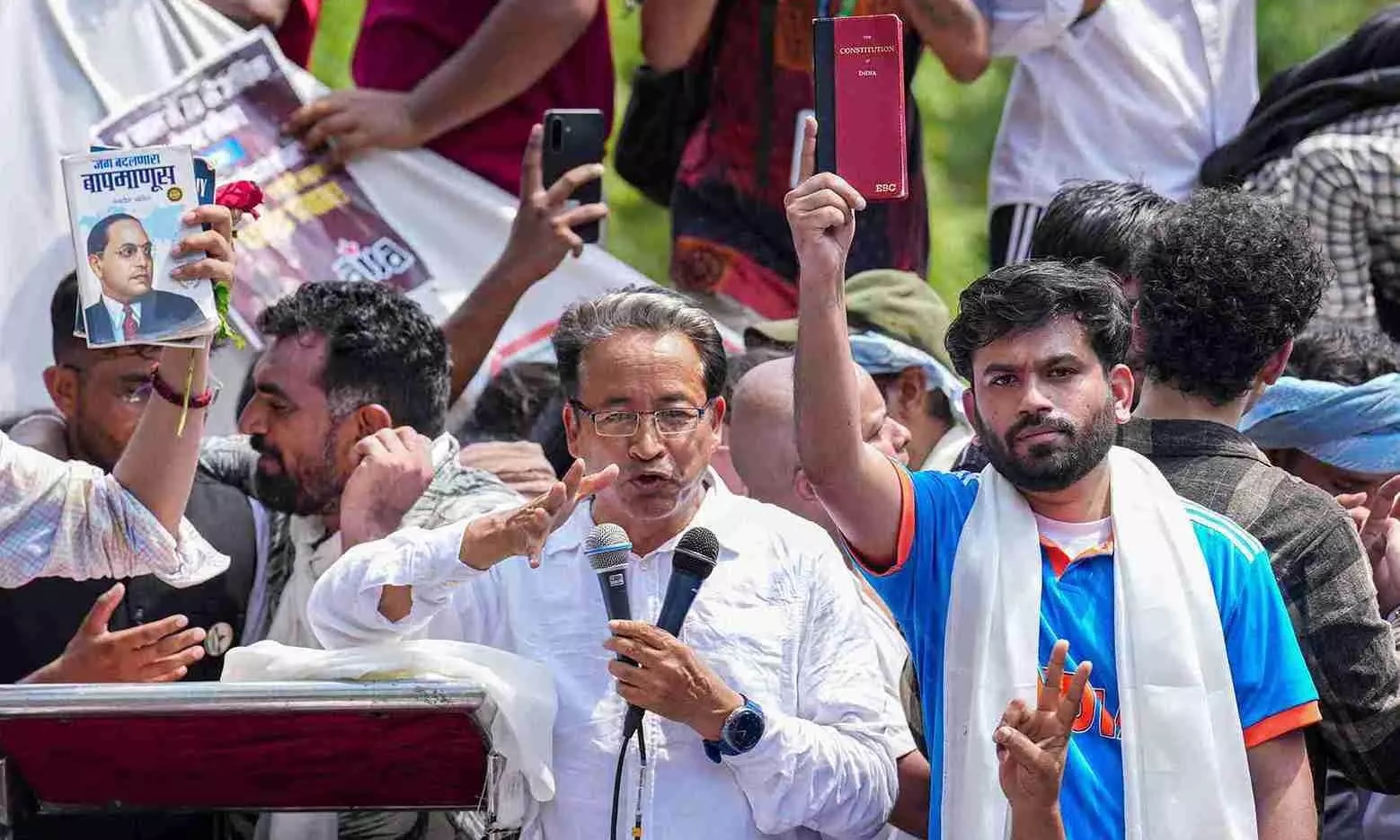
On June 6, 2026, thousands gathered at Jantar Mantar in Delhi — the traditional ground of Indian street democracy — demanding the resignation of Education Minister Dharmendra Pradhan over the NEET 2026 paper leak and CBSE on-screen marking irregularities. The NEET medical entrance examination, which determines the futures of millions of aspiring doctors, had been compromised — with students reporting paper leaks, cancelled tests, and technical failures that suggested systemic rot in India's examination infrastructure. Reports of student suicides drove home the human cost of this institutional failure.
By mid-June, protests had been held in at least six cities, with a mega demonstration at Jantar Mantar planned for June 20. Anna Hazare, Sonam Wangchuk, and advocate Prashant Bhushan have all endorsed the CJP movement. The Congress's student wing NSUI has joined the ground agitation. Rahul Gandhi addressed Kota students — the epicentre of coaching industry pressure and student mental health crises — drawing large, engaged crowds. The Karnataka government of Congress, led by Home Minister Priyank Kharge, took the battle to the RSS itself, demanding that the organisation submit its registration papers, income-expenditure statements, and audited accounts as required by law of all registered entities in India.
The echoes of 2011-12 are unmistakable. The India Against Corruption movement that Anna Hazare led — which catalysed the AAP and weakened the UPA beyond recovery — was also born from accumulated outrage over systemic failure: corruption, governance decay, and a generation's blocked aspirations. Today's youth anger is structurally similar but arguably deeper: unemployment rates for educated youth remain stubbornly high, competitive examinations have been repeatedly compromised, and the state's response has been digital suppression rather than accountability.
THE INDIA BLOC'S CONUNDRUM: Holding the Line or Losing Ground
The INDIA opposition alliance is under its most severe stress since its formation. The TMC's post-Bengal collapse, the Congress-DMK divorce, the AAP's Rajya Sabha defections, and continued pressure on Sharad Pawar's NCP faction have hollowed out the bloc's parliamentary arithmetic. Yet the picture is not uniformly bleak.
A crucial electoral reality offers long-term ballast: in the 2024 Lok Sabha elections, the BJP and its NDA partners received approximately 37% of the polled votes. All anti-BJP parties combined received approximately 63% — nearly double. BJP may manufacture a temporary parliamentary supermajority through defections, but votes do not transfer with legislators. History demonstrates this consistently: the electorate's loyalties are bound to regional parties, their top leaders, cultural identities, language, and local aspirations. No amount of induced defections reshapes voter sentiment automatically.
The most significant unintended consequence of BJP's regional party demolition strategy may be the revival of the Indian National Congress. As the RJD's Lalu Prasad, TMC's Mamata Banerjee, BJD's Naveen Patnaik, NCP's Sharad Pawar, and Shiv Sena (UBT)'s Uddhav Thackeray all face sustained institutional assault, their voters, workers, and local leaders face a political vacuum. The oldest party — Congress — stands as the default gravitational centre. A pattern of political consolidation around Congress, energised by Rahul Gandhi's increasingly confident street-level politics, is not merely possible but structurally logical.
The Congress's willingness to challenge the RSS legally in Karnataka is a significant tactical shift — taking the ideological battle to the organisational nerve centre of the BJP's parent body on procedural-legal grounds, thereby forcing the RSS to either expose its financial architecture or visibly resist legal accountability applicable to all civil society organisations. This is the kind of ground-level constitutional aggression that defined Congress at its best — and it signals a leadership more willing to fight than at any point since 2014.
THE PRESIDENTIAL ENDGAME: Rewriting India's Governance DNA
Perhaps the most consequential yet least discussed element of the BJP's long-term vision is the movement towards a directly elected Presidential system of government. The current Westminster model vests real executive power in the Prime Minister and Cabinet, who are accountable to Parliament. A directly elected President — analogous to the American executive but without America's federalist counterweights, or the Russian model where the President is all-powerful and the Prime Minister subservient — would remove Parliamentary accountability from the executive entirely.
For Narendra Modi and Amit Shah, who have between them increasingly centralised Indian governance into two-person decision-making, this transition would formalise a structure that already operates informally. A directly elected President with a subservient Prime Minister would give whichever of the two occupies the Presidency unchallenged executive supremacy — immune to coalition arithmetic, parliamentary confidence votes, and the constraints of federalism.
This is not merely theoretical. Constitutional law experts have noted that several of the proposed amendments — granting Parliament authority over delimitation timing, linking state assembly elections to national elections, and expanding executive control over judicial appointments — are individually incremental but collectively constitute a structural drift from parliamentary federalism towards centralised presidentialism. India's constitution is not easily converted — it would require amendments to Articles 52 through 78, the most protected architecture of the document — but the direction of travel is unmistakable.
CONCLUSION: A Constitution Under Pressure, A Democracy Refusing to Die
June 2026 presents India with a paradox. On one hand, the ruling establishment has demonstrated extraordinary capacity for political engineering: winning West Bengal against a 15-year incumbent, breaking opposition legislative parties in Parliament, using the SIR to reshape electoral rolls, and introducing constitutional amendments that reorder India's representative democracy. On the other, it has suffered its first ever constitutional amendment defeat, failed to pass delimitation despite enormous effort, and faces a youth movement that — like the anti-corruption agitation of 2011 — carries the seeds of larger political upheaval.
India's democracy is not merely a legal construct. It is a lived reality sustained by the engagement of 640 million voters, a tradition of federalism, a multilingual and multi-religious constitutional compact, and a political culture in which ordinary citizens have repeatedly surprised the powerful. The BJP received 37% of votes in 2024 and governs India. The 63% that opposed it has not disappeared — it has merely been denied adequate political representation through parliamentary manipulation.
The cockroaches, as Chief Justice Kant might acknowledge, have a survival rate that has outlasted every predator for 300 million years. India's democracy, tested since 1947 by emergencies, authoritarianism, communal violence, and corruption, has similarly demonstrated remarkable resilience. Whether that resilience will once again assert itself against the most ambitious centralisation project since the Emergency of 1975-77 remains the defining question of India's political moment.
The answer will be written not in Parliament alone — but on streets like Jantar Mantar, in courtrooms, in the exam halls of millions of aspiring students, and in the quiet judgment of 640 million voters when they next exercise the most powerful tool any democracy possesses: the unreturnable franchise.
000
About The Author

Related Posts


Latest News



Advertisement